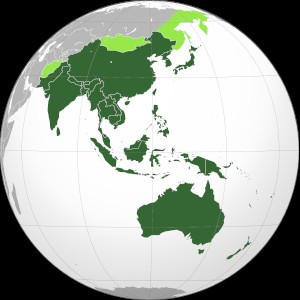
The combined market capitalization of the top 50 companies in the Asia-Pacific (APAC) region surged to $8.1 trillion in 2024, reflecting a 20.6% year-on-year increase. Technology firms led the charge, with Taiwan Semiconductor Manufacturing Company and Tencent Holdings dominating the rankings. However, economic uncertainty, trade risks, and weaker corporate earnings have tempered optimism across various sectors, reveals GlobalData, a leading data and analytics company.
Technology sector topped with 16 companies contributing a total market value of $3.1 trillion. Geographically, China led the rankings with 22 companies collectively valued at $3.9 trillion, followed by Japan with 11 companies at $1.4 trillion, and India with seven companies accounting for $914 billion.
Murthy Grandhi, Company Profiles Analyst at GlobalData, comments: “APAC markets ended 2024 on a cautious note as optimism for the new year diminished amid the rising trade risks from Donald Trump’s presidency and China's faltering economic recovery. The region also grappled with the declining manufacturing activity, weak quarterly corporate earnings, and capital outflows driven by the dollar's yield advantage. These factors contributed to the weakening of regional currencies, increasing the likelihood of inflationary pressures and greater market volatility.”
Technology leads the charge
Taiwan Semiconductor Manufacturing Company (TSMC) retains its position as APAC’s largest company, boasting a remarkable market cap of $850.3 billion, a 69.7% year-on-year (YoY) growth. The global demand for semiconductors and Taiwan’s critical role in chip production has fueled TSMC’s growth. Tencent Holdings secures second place with a 38.5% growth, underscoring the strength of China’s digital economy and its dominance in gaming and social media platforms.
However, the tech sector had its own set of challenges. Samsung Electronics, despite ranking seventh, experienced a sharp 40.5% decline in market cap, as it faced headwinds in the high-bandwidth memory (HBM) chips segment, a vital component for AI processors, tumbling down to seventh position from second position at the end of 2023. This contrast highlights the divergence in performance even within a thriving sector.
China’s financial prowess
Chinese financial institutions continue to maintain a commanding presence. ICBC, Agricultural Bank of China, and Bank of China stood at third, sixth, and eighth, respectively, with YoY growth exceeding 30%. China’s focus on stabilizing its financial sector and supporting domestic economic growth has reinforced the standing of these banks.
Resilience and setbacks in oil & gas, and mining
The oil and gas sector reflects a mixed performance. The market cap of PetroChina, ranked 10th, grew by 22.8%, while CNOOC’s 46.5% growth propelled it to 24th place. In contrast, the market cap of Indian energy giant, Reliance Industries slipped to 13th with an 8.6% decline, reflecting margin pressures and challenges in downstream operations.
BHP Group and Rio Tinto too faced steep declines in their market value with their market cap declining by 28.6% and 20.7%, respectively. Weak commodity demand and geopolitical uncertainties likely contributed to these setbacks, underscoring the sector's vulnerability to macroeconomic volatility.
Emerging leaders and rising stars
China’s Contemporary Amperex Technology (CATL), a global leader in electric vehicle (EV) batteries, jumped eight places to reach 15th place with a 58.6% gain its market cap, driven by the EV revolution. Similarly, Xiaomi's market cap soared by an astonishing 122.5%, highlighting its innovation in consumer electronics and competitive pricing strategies.
India’s Bharti Airtel also climbed to 30th with 52.6% growth, reflecting the expansion of its digital and telecommunications services in emerging markets. Hon Hai Precision Industry (Foxconn), known for its role in Apple’s supply chain, made a notable entry into the top 50, ranking 50th with a 65.1% YoY growth.
Consumer and retail: Mixed outcomes
Kweichow Moutai, the Chinese liquor producer, fell to fifth place with a 14.1% decline, highlighting consumer spending shifts. Conversely, Japan’s Fast Retailing rose to 31st with 38.3% growth, driven by the global appeal of its Uniqlo brand.
Grandhi concludes: “Equity markets in early 2025 will likely to be influenced by key policy decisions. For instance, any fiscal support measure from China, or a shift in trade and diplomatic strategies of US under a new government, or an announcement of interest rate hike which could impact ‘Yen Carry Trade’ affecting carry-trade investments could play a major role. The impact of US economic policies, often referred to as Trumponomics, seems undervalued in markets, which could result in further market corrections.”